
The number of publicly traded companies in the U.S. has dropped from 7,300 in 1996 to about 4,300 today. This massive shift forces high-net-worth investors to look toward private markets to find growth. Alternative investments have moved from a niche allocation to a core component of sophisticated portfolio construction. Offering returns that are not correlated with public equity markets and providing access to income streams unavailable through traditional bonds.
The use of alternative investments high net worth investors employ has become a vital part of institutional-quality portfolio design. As the global market for these assets prepares to reach $24 trillion by 2028, most wealth managers expect to increase client shares. These strategies include private equity, private credit, real assets, and hedge fund approaches, which move differently than traditional stocks and bonds. According to data from Envestnet, 84% of wealth managers expect that alternative shares will rise within the next year. By moving beyond public markets, investors can access options once reserved for large university endowments and pension plans. This shift provides the portfolio resilience needed to navigate market volatility and reach long-term wealth objectives through a diversified mix of assets that exhibit low correlation with public markets.
Constructing a resilient portfolio requires a deep understanding of how specific alternative asset classes function individually and in combination. This analysis leads directly to the first pillar of alternative investing: private equity.
Alternative Investments High Net Worth: Private Equity: Capturing Growth Beyond Public Markets
Private equity enables high-net-worth investors to capture growth from private companies before they reach public exchanges. By investing directly in buyout funds, growth capital, and venture strategies, investors access returns that are not tied to daily stock market fluctuations. Morgan Stanley alone manages $295 billion in client alternative assets, reflecting institutional conviction in this space. Waterloo Capital's Alternative Investment Platform provides clients access to top-tier private equity managers through the firm's 360 degree Critical Infrastructure platform.
Private equity has become one of the most important tools for alternative investments for high net worth portfolios. By investing in private companies rather than public stocks, investors can access growth that is not tied to daily stock market swings. The shift from public to private markets has accelerated as companies stay private longer. The number of U.S. public companies has fallen from 7,300 in 1996 to roughly 4,300 today, a structural decline that channels growth capital away from public exchanges.
Buyout funds and growth capital
Buyout funds acquire established companies and work to improve their operations and profitability before selling them at a gain. These investments often involve taking a controlling stake, giving the investment team direct influence over strategy and management. Growth capital investments, by contrast, provide funding to companies that are already expanding and need capital to enter new markets or develop products. For high-net-worth investors, these strategies offer a way to earn returns that are not correlated with public stock ownership.
Venture capital and distressed assets
Venture capital focuses on early-stage startups with high growth potential. These investments carry more risk but also the possibility of outsized returns from companies that disrupt entire industries. Distressed asset investing takes the opposite approach, acquiring undervalued or struggling companies and restructuring them for long-term value. Both strategies require deep expertise and careful manager selection, which is where an institutional platform like Waterloo Capital's Alternative Investment Platform provides meaningful advantage.
Institutional access through Waterloo Capital
Historically, the best private equity funds were only available to university endowments, pension plans, and institutional investors. Waterloo Capital's Alternative Investment Platform changes this by providing clients with access to the same top-tier managers that serve these institutions. With Don Simoneaux, CAIA, as President and Director of Alternative Investments, the firm brings specialized expertise in manager sourcing, due diligence, and ongoing oversight. This level of access helps HNW investors build private equity allocations that were once out of reach for individual investors. For a deeper look at market trends affecting private markets, see our latest research and insights.
Private Credit: The Rise of Direct Lending for Institutional-Quality Income
Private credit has emerged as a distinct asset class as traditional banks have retreated from mid-market lending. Direct lending provides institutional-quality income through floating-rate loans that adjust with interest rate changes, offering a natural hedge against rising rates. BlackRock manages over $631 billion in alternative assets, with private credit representing a significant and growing portion. Private credit loans sit at the top of the debt stack as senior-secured obligations, providing both yield and a structural layer of protection.
Private credit has moved from a small niche to a key asset class for many high-quality portfolios. As traditional banks have pulled back from mid-sized loans, private credit funds have stepped in to fill the gap, creating a large and liquid market for direct lending. Private credit now offers a way for investors to generate yield through loans made to private firms. These loans often come with terms that are not found in public debt markets. Large firms like BlackRock now manage over 631 billion dollars in alternative assets, which shows the scale of this market.
Yield and Floating-Rate Benefits
One core advantage of private credit is its responsiveness to interest rate changes. Most direct loans use floating-rate structures, meaning the yield on the loan rises if base interest rates increase. In periods of high inflation or rising rates, this dynamic helps preserve the value of the debt holding. Traditional fixed-rate bonds often lose value when rates rise, but private credit can provide a hedge against this risk. These loans also sit at the top of the capital stack. Being senior-secured gives the lender a higher claim on assets if a borrower defaults, adding a layer of safety while still targeting competitive income objectives.
Custom Terms and Senior Security
Direct lending allows for more structural control than public bond markets. Lenders can negotiate specific covenants and terms that govern borrower behavior. These covenants help monitor the financial health of the borrowing firm. If a borrower begins to struggle, the lender can intervene early to protect their capital. Because these loans are not traded on public exchanges, they do not experience the same daily price volatility as stocks or publicly traded bonds. This can reduce overall portfolio volatility. You can review our Private Credit Market Update for coverage of recent lending market developments and yield trends.
Direct Lending Growth
The growth of private credit has transformed how middle-market firms access capital. Many companies now prefer the speed and certainty of private loans over protracted bank syndications or public bond issuance. This has attracted a higher quality of borrower to the private market. For investors, this means access to a broader set of companies across diverse industries. Private credit has grown from a niche allocation to a core holding in most institutional portfolios. Providing a source of income that exhibits low correlation with public equity markets.
Real Assets: Building Inflation-Resilient Portfolio Foundations
Real assets including real estate, infrastructure, and natural resources provide a natural hedge against inflation because their cash flows typically rise with the cost of living. Rent escalations on commercial properties, user fees on toll roads, and commodity price appreciation all adjust upward during inflationary periods. These assets exhibit low correlation with traditional stocks and bonds, making them essential for portfolio diversification. Waterloo Capital's 360 degree Critical Infrastructure platform helps clients access institutional-quality real asset investments.
High net worth investors face a difficult challenge when inflation rises. Standard stocks and bonds often decline in value simultaneously during high inflation periods. Real assets help solve this by linking returns to tangible, income-producing property. These assets include real estate, physical infrastructure, and natural resources. They serve as a core component of alternative investments for high net worth portfolios because they maintain purchasing power when currency values decline.
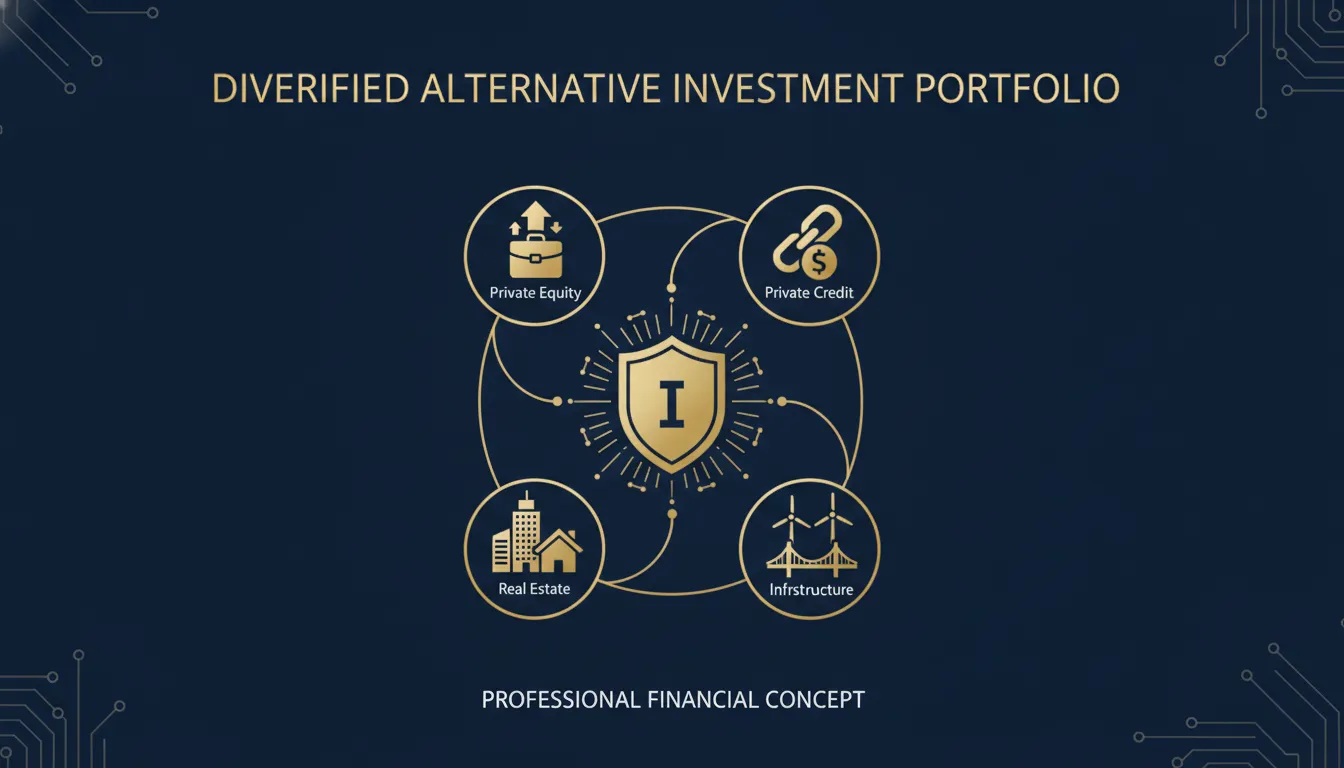
Protecting wealth from inflation
Real assets have a natural link to price changes. When costs rise, the rent on a building or the fee for a toll road typically increases as well. This linkage helps investors maintain purchasing power. A study by the EIU and RBC Wealth Management shows that 72% of U.S. investors believe today's markets require more flexible portfolio strategies. Real assets provide that flexibility by exhibiting low correlation with equity markets. This low correlation helps reduce total portfolio volatility.
Physical assets also generate cash flow through rents or user fees. These distributions can serve as a buffer when bond yields fail to keep pace with inflation. By owning an interest in a port, pipeline, or power generation facility, the investor holds a claim on essential infrastructure that must be used regardless of economic conditions. This consistent demand helps these assets perform through diverse market cycles.
Accessing institutional quality assets
Historically, only the largest pension funds and endowments could acquire major infrastructure assets or prime commercial real estate. Today, the 360 degree Critical Infrastructure platform at Waterloo Capital provides individual investors and their advisors access to these same opportunities. The firm partners with leading institutional managers to source and diligence real asset investments that meet institutional underwriting standards.
Many real asset investments also offer tax advantages. Real estate depreciation, for example, can offset taxable income from operations, allowing investors to retain more of their returns. When combined with inflation protection and low equity correlation, these tax benefits make real assets a durable foundation for long-term portfolio construction. They serve as the ballast that helps a portfolio withstand adverse macroeconomic scenarios.
How Do Hedge Funds and Multi-Strategy Approaches Benefit Sophisticated Portfolios?
Hedge funds employ strategies including long/short equity, global macro, event-driven, and market neutral approaches to generate returns that are not dependent on broad market direction. These strategies can provide portfolio diversification by capturing alpha through manager skill rather than beta through market exposure. RBC Wealth Management research indicates that 60% of U.S. investors now expect their advisors to provide access to these specialized strategies as part of a comprehensive wealth plan.
Hedge funds serve as a key tool for high-net-worth investors seeking to manage risk while pursuing specific return objectives. These funds employ a diverse range of strategies that often diverge from traditional long-only stock and bond investing. While conventional assets move with the broad market, hedge funds attempt to capture value through price inefficiencies, event-driven opportunities, and macroeconomic trends.
Core absolute return strategies
Most hedge funds fall into several primary categories based on their trading approach. Long/short equity funds purchase stocks they expect to appreciate and sell short stocks they expect to decline, allowing them to reduce market exposure while targeting alpha. Global macro funds take directional positions based on economic trends across currencies, sovereign debt, and commodities. These approaches enable alternative investments for high net worth portfolios to generate returns across diverse market conditions.
Event-driven funds concentrate on corporate transactions including mergers, spin-offs, and restructurings where pricing dislocations frequently occur. Market neutral funds seek to eliminate broad market risk entirely by pairing long and short positions to isolate stock-specific returns. At Waterloo Capital, our 360 degree Critical Infrastructure platform helps clients identify and access hedge fund managers with demonstrated skill in these specialized strategies.
Comparing primary hedge fund methods
| Strategy | Risk Level | Liquidity Profile | Equity Correlation |
|---|---|---|---|
| Long/Short Equity | Moderate | Quarterly to Annual | Moderate |
| Global Macro | High | Monthly to Quarterly | Low |
| Event-Driven | Moderate | Quarterly to Annual | Low to Moderate |
| Market Neutral | Low | Monthly to Quarterly | Very Low |
Integration with institutional allocations
Incorporating hedge funds into a portfolio extends beyond selecting individual strategies; it requires understanding how these positions interact with private equity, private credit, and real assets. Diversified portfolios typically use hedge funds to provide a volatility buffer during equity market drawdowns. For sophisticated investors, hedge funds represent a departure from the limitations of public market indexing. The U.S. Securities and Exchange Commission provides guidance on how these private funds are structured and the risks they carry. Waterloo Capital provides institutional access to these strategies, allowing clients to invest alongside major endowments and pension plans.
How Should You Build Your Alternative Investment Allocation Framework?
The traditional 60/40 portfolio of stocks and bonds has become less effective as equity-bond correlation has risen. An alternative investment allocation framework begins with liquidity assessment and time horizon, then maps specific asset classes to return objectives and risk tolerance. Experts at Morgan Stanley suggest allocations of up to 25% to alternative assets for suitable investors. Waterloo Capital's Alternative Investment Consulting team helps clients construct customized frameworks aligned with their long-term wealth objectives.
The 60/40 equity and bond allocation was once the default portfolio construction. It functioned effectively when bonds appreciated during equity declines. However, over the past decade, equity and bond correlations have risen, reducing the diversification benefit of this traditional approach. High-net-worth investors now require a more nuanced portfolio construction methodology. To achieve institutional-quality diversification, capital must be allocated beyond public markets into strategies and asset classes with distinct return drivers.

Adding alternative assets can reduce total portfolio risk through diversification. Because alternatives exhibit low correlation with public equities, they help portfolios maintain stability during market stress. When constructing an allocation framework, each asset class must be evaluated for its specific contribution to portfolio-level objectives. The goal is a portfolio that performs consistently across economic regimes rather than one that simply maximizes return in a single environment.
Reviewing your strategic goals
No single allocation framework suits every investor. The appropriate mix depends on individual liquidity needs, return objectives, and risk tolerance. Private market investments typically involve multiyear lock-up periods, and the allocation framework must account for these liquidity constraints. Investors should segment their portfolio into liquidity tranches. Ensuring near-term cash needs are met by liquid holdings while longer-term capital is deployed into illiquid alternatives that offer higher return premiums.
Experts at Morgan Stanley suggest that suitable investors may allocate up to 25% of their portfolio to alternative assets. For some investors with higher risk tolerance and longer time horizons, the allocation may be larger. Private market funds operate under regulatory frameworks that differ from public securities. The Securities and Exchange Commission maintains resources describing the structure and risks of private investment funds. At Waterloo Capital, our Alternative Investment Consulting team partners with clients to design allocation frameworks that align with their specific financial circumstances and long-term wealth objectives.
Securing institutional-quality access
Access to top-tier alternative investments requires more than selecting any available fund. The performance dispersion between top-quartile and bottom-quartile managers in private markets is significantly wider than in public markets, where index funds track a common benchmark. In private markets, manager skill is the primary determinant of outcomes. Investors must therefore access the same fund managers that serve university endowments, foundation endowments, and corporate pension plans.
The most sought-after private market funds often have capacity constraints, high minimum investment requirements, and selective investor qualification criteria. Waterloo Capital addresses these barriers through its Alternative Investment Platform. Which aggregates client capital to meet institutional minimums and provides access to managers who would otherwise be unavailable to individual investors. This provides institutional quality alternatives that enable clients to compete at the same level as large allocators.
Framework construction steps
- Assess liquidity needs and time horizon. Alternative investments typically involve multiyear lock-up periods. Ensure that sufficient liquid assets are available for near-term spending requirements and emergency reserves.
- Determine risk tolerance and return objectives. Different alternative asset classes carry distinct risk profiles. Private equity targets higher returns with longer lock-ups, while private credit offers current income with lower volatility. Define return targets and risk constraints before selecting specific allocations.
- Select alternative asset classes aligned with your profile. Map each asset class to its role in the portfolio. Private equity provides growth, private credit delivers income, real assets offer inflation protection, and hedge funds contribute diversification through uncorrelated return streams.
- Access institutional-quality managers. Manager selection is the most consequential decision in private market investing. Waterloo Capital provides institutional quality alternatives through its Alternative Investment Platform, connecting clients with the same managers used by large institutional allocators.
- Monitor and rebalance periodically. Alternative investment values fluctuate with market conditions and fund performance. Review allocations annually and adjust as portfolio drift occurs or as new investment opportunities arise. Your Alternative Investment Consulting team at Waterloo Capital provides ongoing portfolio monitoring and rebalancing recommendations.
Frequently Asked Questions
How much should I invest in alternative assets?
According to Morgan Stanley, suitable investors may allocate as much as 25% of their portfolio to alternative assets. This allocation helps construct a balanced risk and return profile. The appropriate percentage depends on individual liquidity requirements, time horizon, and return objectives. For many investors, this allocation helps reduce portfolio vulnerability to significant equity market drawdowns. Alternative allocations are most appropriate for investors with a long-term wealth preservation and growth perspective.
Are alternative investments only for high-net-worth investors?
Alternative investments were historically limited to institutional and ultra-high-net-worth investors. While access has expanded, most strategies still require accredited investor status with at least $1 million in investable assets. Research from Envestnet indicates that most wealth managers now view alternatives as a necessary component of sophisticated portfolio construction. The accredited investor requirement helps ensure that participants can evaluate and absorb the risks associated with illiquidity and limited regulatory oversight.
What are the risks of alternative investments?
Alternative investments carry specific risks including limited liquidity, multiyear lock-up periods, higher fee structures, and less frequent valuation data than public securities. Investors may not be able to redeem their capital for several years. However, the potential for enhanced returns, portfolio diversification, and access to return streams unavailable in public markets may compensate for these risks. Investors should work with a qualified fiduciary advisor to evaluate whether specific alternative investments align with their overall portfolio strategy.
Can alternative investments protect against inflation?
Yes, real assets such as infrastructure, real estate. And natural resources tend to maintain purchasing power during inflationary periods because their cash flows typically increase with the cost of living. Additionally, private credit investments with floating-rate structures adjust upward as interest rates rise, providing a natural inflation hedge. According to Arete Wealth, this inflation-hedging characteristic is a primary reason institutional allocators maintain significant real asset positions in their portfolios.
How do I access institutional quality alternative investments?
Waterloo Capital provides a platform for investors seeking institutional-quality alternative investment access. Our 360 degree Critical Infrastructure platform connects clients with top-tier private market managers. This enables participation in investment opportunities alongside university endowments and pension plans. As a fee-only, fiduciary RIA, Waterloo Capital provides objective guidance on portfolio construction and manager selection, helping clients build allocation frameworks designed for long-term wealth outcomes.
Start Building Your Institutional-Quality Alternative Investment Portfolio
High-net-worth investors who limit their portfolios to public stocks and bonds forgo the diversification and return potential that alternative investments provide. Market cycles are unpredictable, and delaying alternative allocation may mean missing entry windows into top-tier funds that close after reaching capacity. Each month of delay represents an opportunity cost in portfolio construction. Waterloo Capital helps clients construct customized alternative investment allocation frameworks through our Alternative Investment Platform. As a fee-only fiduciary partner, we provide the institutional-quality access and objective guidance required to build portfolios designed for long-term success.
Ready to schedule a consultation? Call (512) 777-5900 to speak with a fiduciary advisor about building your alternative investment allocation framework.