It’s a massive week on Wall Street with major earnings reports, a Federal Reserve meeting, and the US Jobs Report.
Market Commentary
It’s a massive week on Wall Street with major earnings reports, a Federal Reserve meeting, and the US Jobs Report. Following last week’s decline in mega-cap tech stocks, which have driven the bull market, and the resurgence of previously overlooked market sectors, investors are keen to determine whether this is a new trend or a brief anomaly.
A major contributor to last week’s downturn was the disappointing second-quarter reports from Tesla and Google, which raised concerns about the performance of big tech as a whole. This week, we’ll see if those struggles have extended to the rest of that group, as four members of the Magnificent 7 (Microsoft, Apple, Meta, and Amazon) are set to release their results. The impact of these announcements is crucial, as growth from these firms has justified much of the market’s valuation. If they fail to meet expectations, a correction at the index level is likely.
Since the last FOMC meeting, several significant economic data releases have altered market expectations regarding the path for interest rates. Economic growth has accelerated, the job market has softened, and inflation has eased. While the Fed is almost certain to maintain the current policy rate, any insights from their commentary on future meetings will be crucial. Later in the week, we will receive updates on the struggling manufacturing sector and a new jobs report, which will help determine if a healthy loosening in the labor market is emerging in the data.
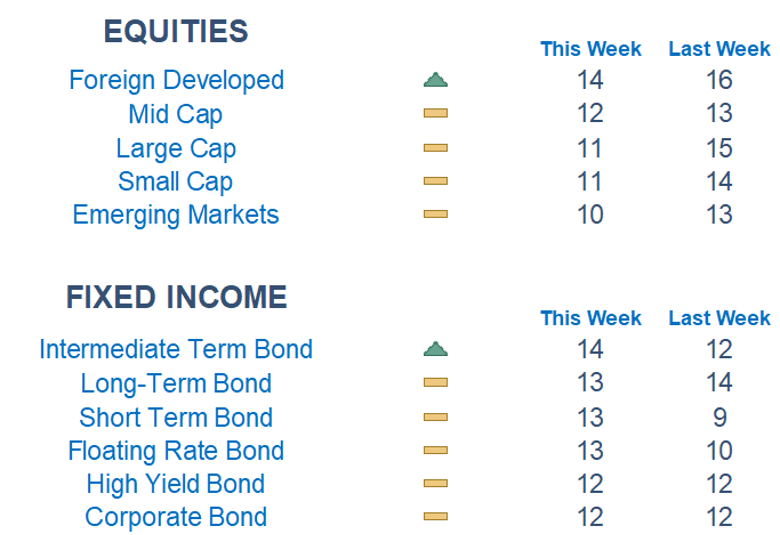
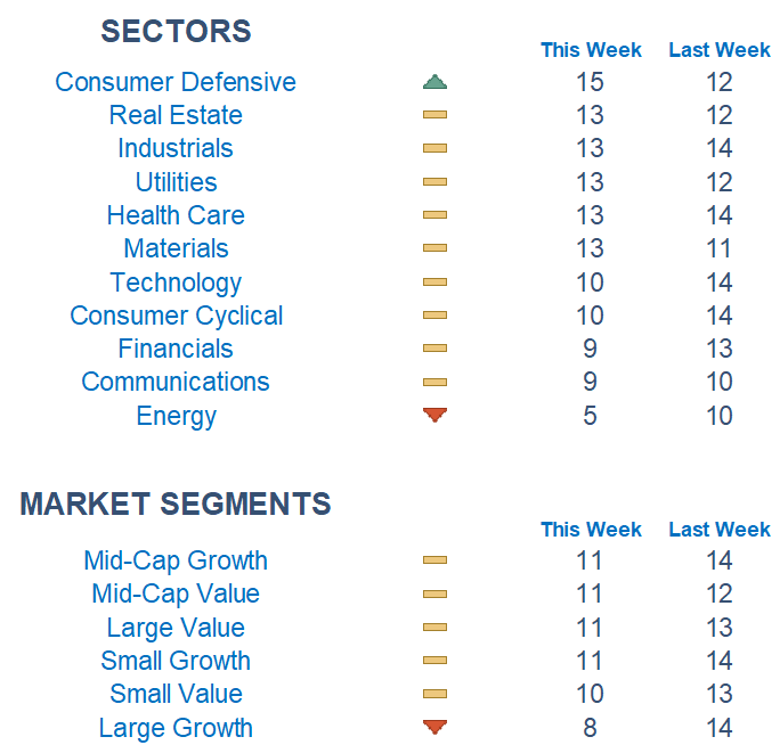
As the Newton model readings below indicate, there has been a broad deterioration in the momentum of equity markets. While some specific areas, such as foreign developed and utilities stocks, have gained traction, most sectors are struggling to regain their footing. These readings suggest potential near-term challenges across the market, rather than a broadening out of performance. Time will tell whether one of these new trends will prevail or if the previous regime will reassert itself.
Economic Releases This Week
Monday: None
Tuesday: Consumer Confidence, JOLTS
Wednesday: ADP Employment, FOMC Interest Rate Decision
Thursday: S&P Manufacturing PMI, ISM Manufacturing PMI, Initial Jobless Claims
Friday: US Jobs Report, Consumer Sentiment
Stories to Start the Week
Famous short seller Andrew Left has been accused of securities fraud as the government alleges he manipulated the market with misleading public statements
Billionaire hedge fund manager Bill Ackman has postponed the IPO of his closed-end fund Pershing Square USA
The Park Fire in California has grown into one of the largest in the state’s history as it has covered more than 350,000 acres and destroyed 134 structures
The DOJ laid out its case for banning TikTok, alleging in a court filing they have been sending US user data to China about divisive topics like abortion, religion, etc
What is Newton?
Our Newton model attempts to determine the highest probability of future price direction by using advanced algorithmic and high-order mathematical techniques on the current market environment to identify trends in underlying security prices. The Newton model scores securities over multiple time periods on a scale of 0-20 with 0 being the worst and 20 being the best possible score.
Trend & level both matter. For example, a name that moves from an 18 to a 16 would signal a strong level yet slight exhaustion in the trend.
Technical trading models are mathematically driven based upon historical data and trends of domestic and foreign market trading activity, including various industry and sector trading statistics within such markets. Technical trading models, through mathematical algorithms, attempt to identify when markets are likely to increase or decrease and identify appropriate entry and exit points. The primary risk of technical trading models is that historical trends and past performance cannot predict future trends and there is no assurance that the mathematical algorithms employed are designed properly, updated with new data, and can accurately predict future market, industry and sector performance.